 Christopher Cummins · 5 min read
Fall Prevention in Oxford MS: 7 Risks You Can Fix
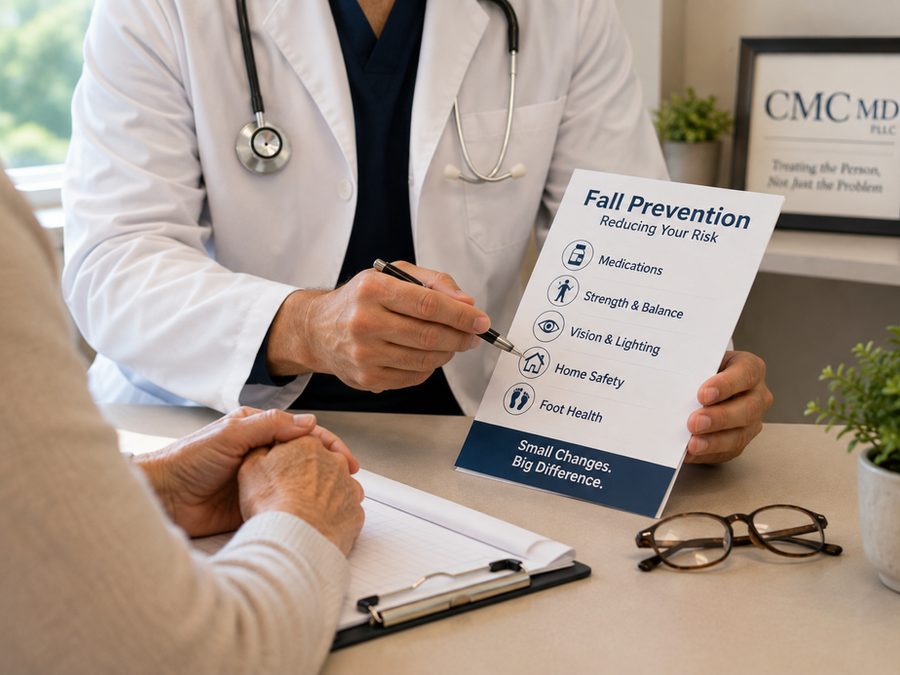
Fall prevention in Oxford MS gets talked about the way flossing does: everyone agrees it matters, and almost nobody brings it up until something has already gone wrong. The numbers make a stronger case than the reminders do. According to the CDC, more than one out of four adults 65 and older falls each year, but less than half of them tell their doctor about it.
That gap is the whole problem. A fall is not just an event, it is information, and the CDC notes that falling once doubles your chances of falling again. Reporting it is what turns a scary afternoon into a plan.
Timing matters here too. The National Council on Aging holds Falls Prevention Awareness Week from September 21 to 25 in 2026, timed to the first day of fall. It is as reasonable a prompt as any to look honestly at the risks in your own life.
Falling Is Common, But It Is Not Normal Aging
This distinction is worth sitting with, because it changes what you do next.
Common means many people experience it. The CDC reports roughly 3 million emergency department visits and about 1 million hospitalizations each year related to older adult falls.
Normal would mean it is simply part of getting older and nothing can be done. That second framing is the one worth rejecting. Falls prevention organizations are direct on this point: falls are not an inevitable part of aging, and a substantial share of the contributing factors can be modified.
The CDC's own guidance to physicians centers on screening for fall risk and then addressing changeable factors, specifically naming medications that increase fall risk and poor strength and balance. Those are not fixed traits. They are adjustable.
Seven Risks Worth Addressing
1. Medications That Affect Balance
This is often the highest-yield place to start and the one patients least expect. Prescription medications, over-the-counter products, and dietary supplements can all produce side effects that raise fall risk.
The action item is not to stop anything on your own. It is to bring every bottle to a visit, including the ones you do not think of as medicine, and ask directly whether any of them could be affecting your balance.
2. Loss of Sensation in the Feet
Your balance system depends on constant feedback from your feet telling your brain where the ground is. When peripheral nerve damage reduces that signal, balance degrades, particularly in the dark or on uneven surfaces.
This is why numbness deserves attention even when it does not hurt. Reduced sensation is both a wound risk and a stability risk. Nerve symptoms that have been quietly present for months belong in this conversation.
3. Knee, Hip, and Joint Pain
Pain changes how you move, usually without your permission. People with sore knees shorten their stride, shift weight to the other side, hesitate on stairs, and avoid the movements that would maintain the strength keeping them upright.
Untreated joint pain therefore contributes to falls twice over: once through the immediate instability, and again through the deconditioning that follows months of moving less.
4. Declining Strength and Balance
Strength and balance are among the modifiable risk factors the CDC names, and they respond to training at any age. This is the single most encouraging item on the list, because it is the one where consistent effort reliably produces change.
What that training should look like depends on your joints, your heart, and your current ability, which is a conversation to have with your physician rather than a program to pull off the internet.
5. Vision and Lighting
Vision changes gradually enough to escape notice. So do the shadowy spots in a house you have lived in for twenty years. An up-to-date prescription and better lighting on stairs and hallways are among the least glamorous and most effective interventions available.
6. Home Hazards
Loose rugs, cords crossing walkways, cluttered stairs, bathrooms without grab bars, and stairways missing a second handrail account for a large share of falls in the place people feel safest.
Walking through your own home specifically looking for these is worth an hour. Having someone else do the walkthrough is better, since familiarity makes hazards invisible.
7. Not Mentioning the Near-Misses
The stumble you caught yourself on. The grab for the counter. The moment on the stairs that made your heart jump. These are the most useful data points you have, and they almost never get reported.
If you have had one, say so at your next visit. Less than half of people who actually fall mention it, which means near-misses are reported even less often.
How Fall Prevention in Oxford MS Fits Into Your Care
Fall risk is rarely one thing. It is usually a medication, plus a knee, plus a slightly dimmer hallway, plus feet that do not report back the way they used to. That is why it fits naturally into general medical care rather than into a specialty visit.
At CMC MD PLLC, primary care services cover comprehensive evaluations for everyday medical needs, which is the setting where a medication review and a discussion of recent stumbles belong. Knee pain treatment and rehabilitation focuses on non-surgical options to reduce pain and restore movement, which addresses the mobility side. For patients whose balance issues trace back to nerve symptoms, Neuropathy and Nerve Spa Therapy is a non-invasive approach aimed at improving nerve function, stimulating circulation, and reducing inflammation.
Having these under one roof matters for a problem this multifactorial. The point is not that any single treatment prevents falls. It is that the contributing factors get looked at together instead of one at a time by different offices.
Care From a Physician With Nearly Three Decades of Experience
Dr. Christopher Marascalco Cummins is a third-generation physician, family medicine trained, with more than 27 years of experience and over 22 years of service as a U.S. Army veteran. His practice emphasizes practical, evidence-based solutions that reduce pain, restore function, and help patients get back to daily life, with a stated approach of treating the person rather than just the problem.
Fall risk is close to a definitional example of why that framing matters. No single body part explains it.
What to Bring Up at Your Next Visit
Any fall in the past year, including ones where you were not hurt.
Any near-fall, stumble, or grab for support.
Whether you have started avoiding stairs, ladders, or uneven ground.
Whether you feel unsteady standing up from a chair or in the dark.
Every medication and supplement you take.
Any numbness, tingling, or reduced sensation in your feet.
Any joint pain that has changed how you move.
Start Before the Fall, Not After
The most valuable version of this conversation happens while nothing has broken. Waiting until after a hip fracture means working backward from a much harder starting point.
CMC MD PLLC is located at 501 Heritage Drive, Suite 111, Oxford, MS 38655, and is open Monday through Friday from 9:00 a.m. to 4:00 p.m. Call (978) 444-2273 or book an appointment online to review your risk factors.